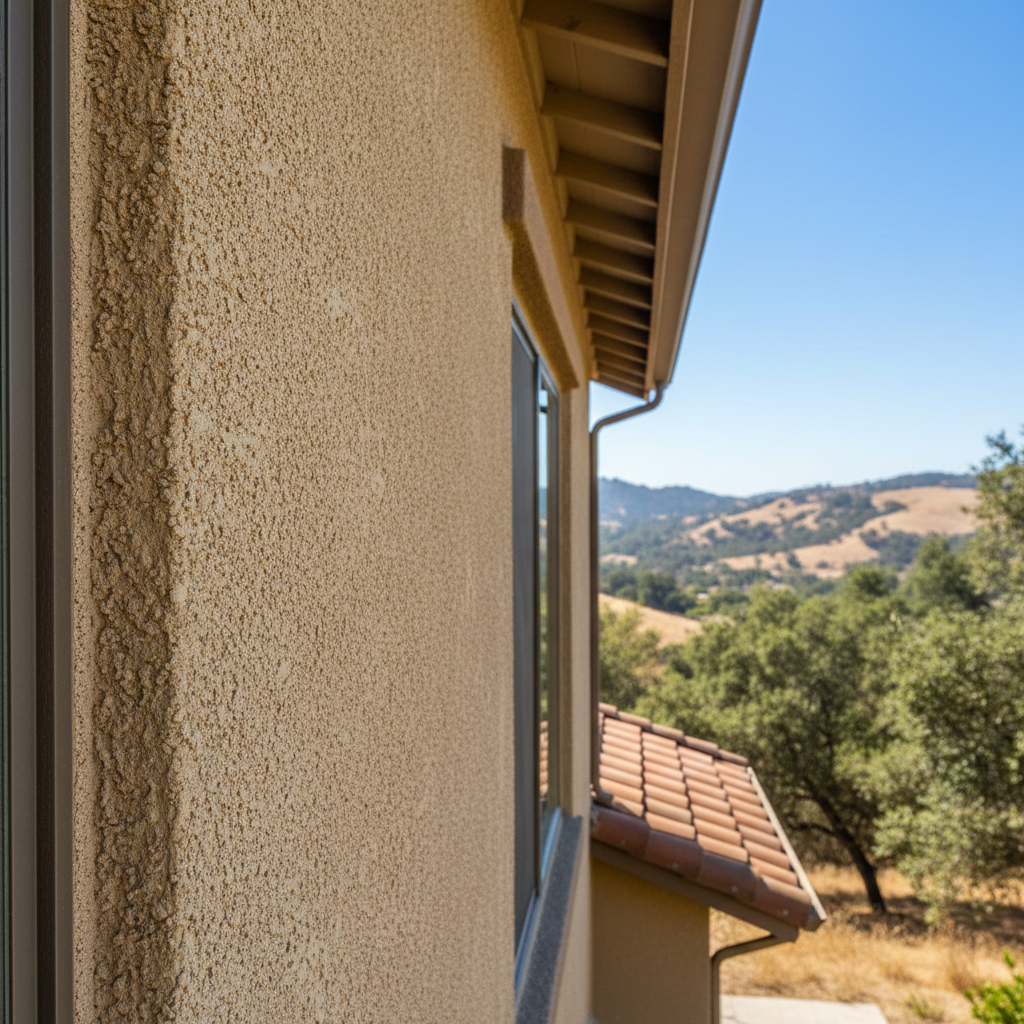
What Exactly is EIFS?
Let's talk about EIFS for a minute. You might hear folks call it 'synthetic stucco' sometimes, but really, it's its own thing. EIFS actually stands for Exterior Insulation and Finish System. It's a multi-layered exterior finish that basically puts insulation on the outside of your walls, then covers it all with a tough, flexible finish coat. Think of it like a high-tech blanket for your house, keeping it cozy. It's definitely not the same as traditional stucco, which is mostly cement, sand, and lime. EIFS, on the other hand, uses a foam insulation board, a base coat with a reinforcing mesh, and then a textured finish coat on top.
We've certainly seen EIFS on all sorts of buildings around Los Altos, from commercial spots to residential homes, especially those built in the last few decades. It's popular because it's great for energy efficiency, and you can get some really interesting architectural details with it — stuff that's pretty tough to pull off with traditional stucco.
Before You Even Think About Installation
Okay, so you're considering EIFS. Good for you for doing your homework! Before any work starts, you really need to understand what your existing wall structure is made of. Is it wood frame? Masonry? This dictates a lot about how we'll attach the EIFS system and what kind of moisture barrier you'll need. Honestly, this isn't something you want to guess about. If you've got existing siding, that's coming off. All of it. You need a clean, flat, structurally sound surface to begin with.
Moisture management is absolutely critical with EIFS. I can't stress this enough. Modern EIFS systems are called 'drainage EIFS' for a reason, you know? They're designed to let any water that happens to get behind the system drain right out. You need a proper water-resistive barrier (WRB) installed correctly, with flashing around all openings – your windows, doors, any penetrations. This is not a DIY job for most homeowners. If that WRB isn't installed perfectly, you're just asking for trouble down the line, and believe me, we've seen some real nightmares from improperly installed systems.
The Installation Process: What You Can (and Can't) Do
So, what can a handy homeowner realistically tackle? Honestly, not much of the actual EIFS installation itself. This isn't like painting a room or even laying down some laminate flooring. It's a specialized trade. Here's why:
- Insulation Board Attachment: The foam boards need to be attached precisely, either mechanically (screws/fasteners) or with adhesive, or sometimes both, depending on the surface. The adhesive application is specific, and gaps are a definite no-go.
- Base Coat and Mesh: This is where the magic happens for strength. We apply a polymer-modified cementitious base coat, and then embed a fiberglass mesh into it. The mesh needs to be fully encapsulated and overlap correctly at seams and corners. If you don't get this right, you'll end up with cracks.
- Finish Coat: This is the top layer, giving you color and texture. It's usually an acrylic-based material, and it needs to go on uniformly. Any inconsistencies will show, especially on a large, flat wall. You'll see trowel marks, uneven texture, and color variations, and nobody wants that.
What you can do, and definitely should do, is prepare the site. Clear away shrubs, move outdoor furniture, protect your landscaping. Make sure there's clear access for workers and materials. You can also handle the clean-up of debris at the end of each day, if you're up for it. But for the actual EIFS layers? You really need a pro.
When we do EIFS installations here at Ace Stucco Co, we're really careful about every single layer. We understand the unique challenges of Los Altos homes, like the occasional heavy winter rains we get, and how important proper drainage is. We're not just slapping material on your house; we're building a system designed to protect it for years.
After Installation: Maintenance and Longevity
Once your EIFS is installed, it's pretty low maintenance, but not *no* maintenance. You'll want to keep it clean. A gentle washing with a hose and a soft brush can remove dirt and grime. Just avoid high-pressure washers, as they can damage the finish. Check for any cracks or damage, especially after any significant weather events. If you see small cracks, you can often seal them with an elastomeric sealant. Larger damage, like impact holes, will need a professional repair to make sure the system's integrity and moisture resistance stay intact.
One thing to watch out for in older Los Altos homes that might have had EIFS installed decades ago is the non-drainage type. If you have an older system and suspect moisture issues, get it inspected. Modern drainage EIFS is a much better product, but older barrier systems could be problematic if not maintained perfectly.
The biggest takeaway here is that EIFS is a fantastic product when installed correctly. It offers great insulation and a beautiful finish. But it's a system, and every part of that system needs to be done right. Don't cut corners, especially on the moisture barrier and flashing. For the actual application, trust me, you'll be much happier, and your home will be much better protected, if you bring in experienced professionals who know their way around these materials.