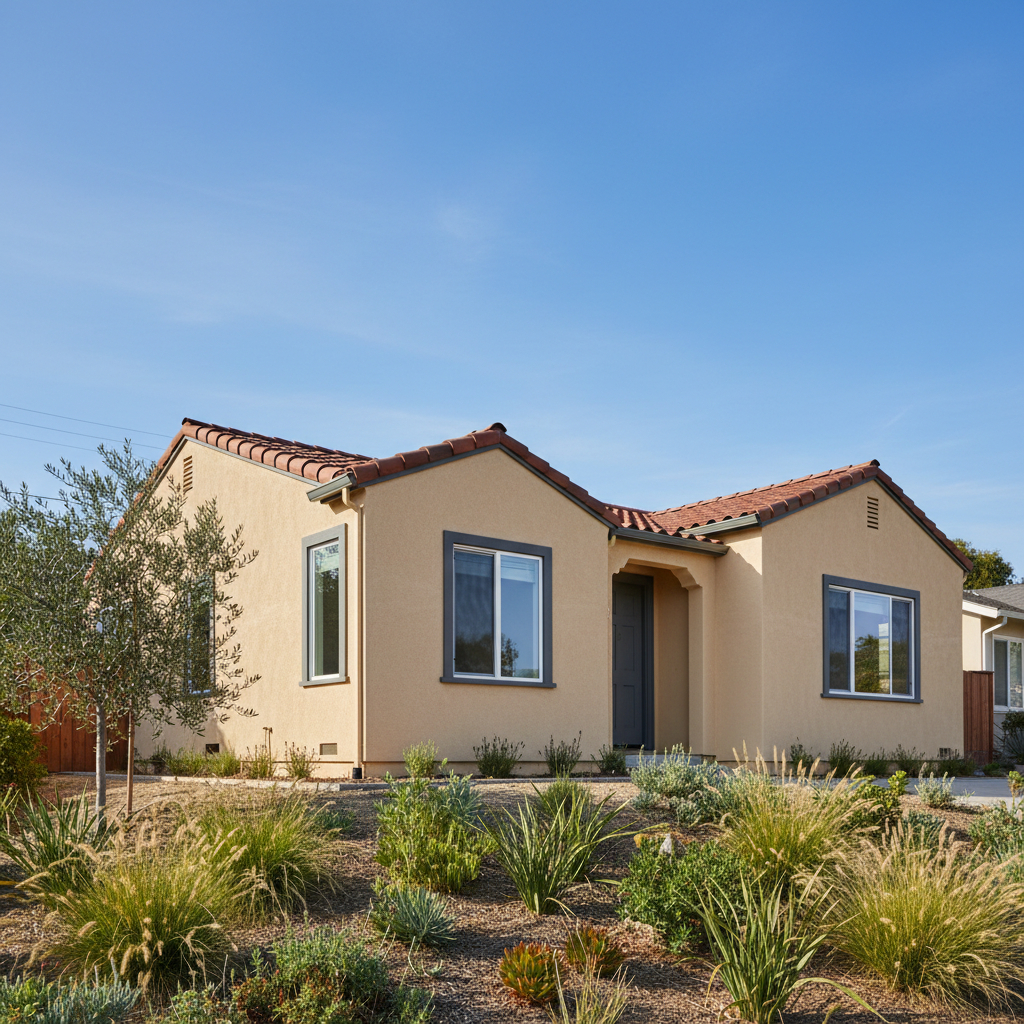
Thinking about EIFS for your home? It's a smart choice for insulation and a modern look, no doubt, but let's be real: you want to know what it's going to hit your wallet. I've been doing this for a long time, and I've seen a lot of EIFS jobs in Los Altos, from the older ranch homes near Grant Road to the newer builds up in the hills. Here's the straight talk on what you can expect to pay.
What Makes EIFS Cost What It Costs?
A lot of things go into the final price tag for an EIFS installation. It's not just a simple square footage calculation, though that's a big part of it. You've got to consider:
- The type of EIFS system: There are different classes of EIFS, you know. Some are more basic, others are designed for higher impact resistance or specific drainage needs. A drainage EIFS system, for instance, which we often recommend in our climate to manage moisture, will naturally cost more than a barrier system. Why? Because it's more complex to install and uses more components.
- How big and complicated your home is: A simple, rectangular house with minimal architectural features is always going to be cheaper per square foot than a multi-story home with lots of bump-outs, intricate window details, arches, or decorative bands. Every corner, every angle, every opening adds labor, plain and simple.
- Condition of the existing surface: If we're going over existing siding, we need to make sure it's sound. If there's rot, water damage, or significant unevenness, that's going to require prep work – repairs, furring strips, or even removal of the old material – and that adds to the cost.
- Insulation thickness: EIFS comes with an insulation board, and the thicker the insulation, the better the R-value. But, yeah, it also means a higher material cost. Most residential jobs use 1-2 inches, but if you're really aiming for maximum energy efficiency, you might opt for more.
- Finish texture and color: Some textures are more labor-intensive to apply than others. A smooth finish, for example, requires a very skilled hand and more time to get perfect than a heavily textured sand finish. Custom colors can also sometimes carry a premium.
- How easy it is to get to: Is your house easy to get to? Do we need extensive scaffolding? Are there landscaping features that make it hard to set up? Difficult access means more time and specialized equipment, which increases labor costs.
- Permits and engineering: For larger or more complex EIFS projects, especially if it's a new build or a significant renovation, you might need engineering reviews and specific permits from the city of Los Altos. These aren't usually included in the contractor's direct labor/material quote but are an additional project cost you'll incur.
Typical Cost Ranges in Los Altos
Alright, let's talk numbers. For a full EIFS installation on a typical Los Altos home, you're generally looking at a range of $12 to $25 per square foot of wall surface area. This is for a complete system, installed correctly.
- On the lower end ($12-$16/sq ft): This would be for a straightforward job on a relatively simple house, perhaps a single-story with good access, using a standard drainage EIFS system, 1-inch insulation, and a common texture.
- Mid-range ($16-$20/sq ft): Most projects fall here. This covers homes with a bit more architectural detail, perhaps two stories, 1.5-2 inches of insulation, and a slightly more involved finish.
- Higher end ($20-$25+/sq ft): This is for complex homes – multiple stories, lots of intricate details like cornices or quoins, thicker insulation, difficult access requiring extensive scaffolding, or specialized systems. If your existing surface needs a lot of remediation, that can push you into this range too.
So, for a 2,000 square foot house with, say, 1,500 square feet of exterior wall surface, you could be looking at anywhere from $18,000 to $37,500. It's a big range, I know, but that's why getting a detailed quote is so important.
What Should Be in Your EIFS Quote?
When Ace Stucco Co gives you a quote, or any reputable contractor for that matter, it should be detailed. Don't just accept a one-liner. You want to see:
- A breakdown of materials: This includes the specific type of EIFS system (e.g., a Class PB drainage system), insulation thickness, mesh type, base coat, primer, and finish coat.
- The scope of work: What exactly are we doing? Is it just the walls? Does it include trim, soffits, fascia? Are we removing old siding? What kind of prep work is included?
- Labor costs: This covers the installation of all components.
- Warranty information: What kind of warranty do they offer on their work and the materials?
- Payment schedule: Typically, there's an upfront deposit, progress payments, and a final payment upon completion.
- Cleanup and debris removal: Make sure they're responsible for hauling away all the old materials and keeping the site tidy.
A good quote will also mention things like protection of surrounding areas, flashing details around windows and doors, and proper termination of the system at the ground level.
How to Avoid Overpaying
Nobody wants to get ripped off. Here's my advice:
- Get multiple quotes: Three is usually a good number. Don't just go with the cheapest. Compare what each contractor is offering.
- Ask for references: Talk to past clients. See their work.
- Understand the system: Ask questions about the type of EIFS they're proposing and why. A good contractor will educate you.
- Check credentials: Make sure they're licensed, bonded, and insured. For EIFS, specialized training and certification are a big plus.
- Beware of lowball offers: If one quote is significantly lower than the others, there's usually a reason. They might be cutting corners on materials, labor, or not including everything in the scope.
- Don't rush: Take your time to review everything. This is a big investment in your home.
EIFS is a fantastic exterior system when installed correctly. It's durable, energy-efficient, and looks great. Just make sure you're working with someone who knows what they're doing and gives you a clear, honest picture of the costs involved.